How AI Is Transforming the Healthcare Industry in 2027
Have you ever sat in a doctor's waiting room, staring at the clock, wondering why modern medicine still feels so slow and paperwork-heavy?
We have supercomputers in our pockets. We have self-driving cars. Yet, when you walk into a hospital, you often see doctors spending more time typing on keyboards with their backs turned than actually looking into your eyes.
Well, that whole picture is changing fast.
As we look at how AI is transforming the healthcare industry in 2027, artificial intelligence is no longer just a futuristic promise or an experimental test in a tech lab. It has moved straight into everyday medical clinics, hospital operations, mobile health apps, and emergency rooms.
And no, robots are not replacing doctors.
Instead, artificial intelligence is doing what smart technology has always done best: removing repetitive busywork, connecting messy medical records, catching tiny health warning signs early, and giving doctors their time back so they can actually care for people.
Whether you are a patient, a clinic owner, or a tech enthusiast, let us sit down and break down everything happening right now in plain, simple language.
What Does AI in Healthcare Actually Mean in 2027?
Let us demystify the term before we go any further. When people talk about AI in medicine, they often imagine a sci-fi robot performing heart surgery all by itself.
That is not what everyday healthcare AI looks like.
In simple words, artificial intelligence in medicine is smart software trained on millions of data points. Think of digital health records, high-resolution X-rays, lab results, and genetic patterns. The software learns what normal looks like, notices tiny deviations that humans might miss when tired, and automates repetitive steps that take hours of human time.
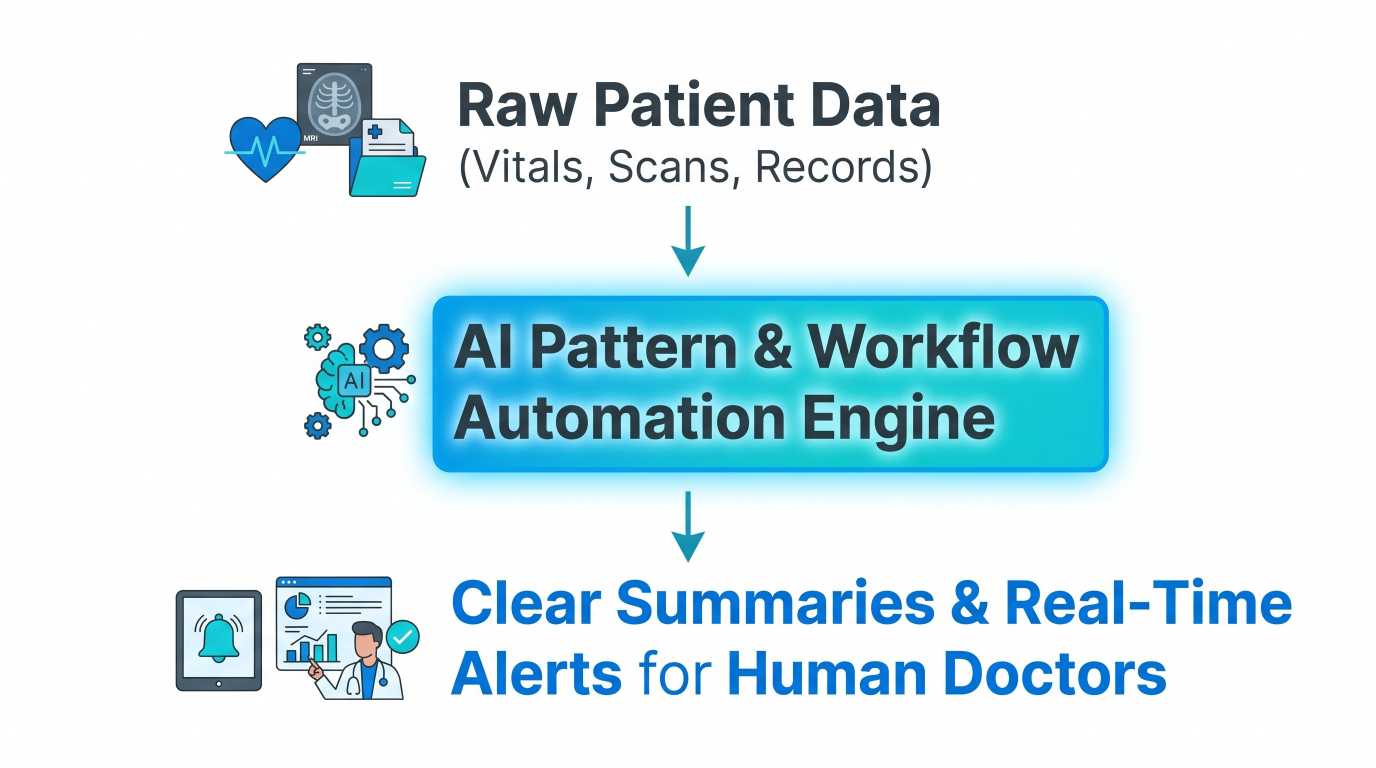
By 2027, the focus has shifted from "Can AI answer medical questions?" to "Can AI help our clinics run smoothly and keep patients healthy at home?" The answer is an absolute yes.
1. Ambient AI Scribes: Giving Doctors Their Ears and Eyes Back
Think about the last time you visited a doctor. The doctor probably asked you questions while frantically typing notes into a computer screen.
Doctors hate that experience just as much as patients do. Medical note-taking, billing codes, and paperwork cause severe burnout for doctors and nurses worldwide.
In 2027, ambient clinical AI tools have changed this dynamic completely.
How Ambient AI Works in the Exam Room
You walk into the clinic and talk to your doctor naturally.
A secure smart microphone sits quietly on the desk, listening to the conversation with your permission.
The AI filters out casual chatter, like talking about the weekend weather, and captures only medical details.
It organizes the symptoms, notes medication names, drafts prescriptions, and assigns proper medical billing codes instantly.
When your visit ends, the doctor reviews the screen, makes any small corrections, signs off, and hands you your plan.
Doctors who use ambient listening tools finish their notes in minutes rather than spending two or three hours typing after clinic hours. More importantly, the doctor can look you in the face during your appointment, listen closely, and treat you like a human being again.
2. Faster and More Accurate Disease Detection
Medical scans such as MRIs, CT scans, mammograms, and X-rays contain millions of tiny pixels. A human radiologist might look at dozens of complex scans every single day, often working long overnight shifts. Even the best doctor can experience eye fatigue.
AI never gets tired.
Spotting Problems Early
In major clinical studies, computer vision algorithms work as a reliable second pair of eyes. In breast cancer screening programs across hospitals, AI-assisted screening has helped clinicians detect up to 20% to 29% more early-stage cancers compared to traditional single-doctor reviews, all while cutting down reading workloads significantly.
Medical Area | What the AI Does | Benefit to You as a Patient |
Radiology | Flags shadows on lung X-rays and mammograms | Quicker results and fewer missed early warnings |
Cardiology | Spots abnormal heart rhythms on smart ECG monitors | Warnings before severe heart problems strike |
Eye Care | Analyzes retinal photos for signs of diabetes damage | Catches eye damage before vision loss occurs |
Dermatology | Evaluates skin mole changes from smartphone photos | Flags suspicious spots for immediate biopsy |
The AI does not make the final call; the human specialist always makes the medical decision. But the AI ensures that urgent, high-risk scans jump straight to the top of the specialist's queue so emergency patients get treated first.
3. Remote Patient Monitoring and Smart Health Wearables
Remember when checking your health meant driving to a clinic, sitting in an uncomfortable plastic chair, and getting your blood pressure checked once every six months?
That single blood pressure reading is just a snapshot. It does not show what your heart does when you climb stairs, deal with family stress, or sleep at night.
In 2027, healthcare has shifted from reactive treatment to proactive monitoring.
Wearables Becoming True Medical Assistants
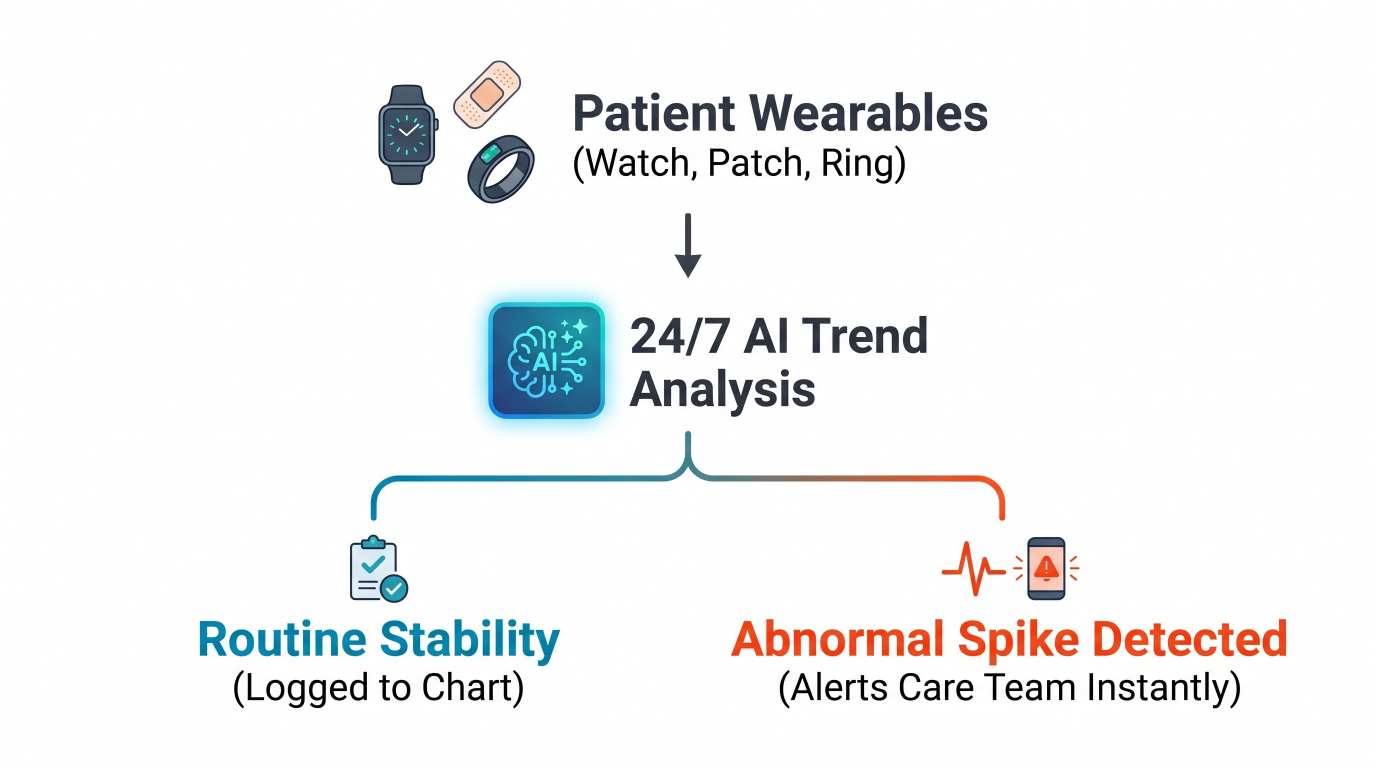
Smartwatches, ring sensors, and continuous glucose monitors now run on-device machine learning. Instead of flooding your doctor with useless, noisy data, the software watches for dangerous trends:
A sudden spike in resting heart rate over three consecutive nights.
Subtle respiratory patterns that signal early lung infection or asthma flare-ups.
Irregular blood sugar drops for diabetic patients hours before they feel dizzy.
If a problem appears, the patient's mobile app sends a simple alert: "Your resting vitals are unusual today. Your clinic care team has been notified, and your nurse will call you shortly."
This early intervention prevents thousands of unnecessary emergency room visits and keeps elderly patients living safely in their own homes.
Need Custom Software or Automation for Your Health Business?
Building modern digital tools should not feel overwhelming. If you manage a medical clinic, private practice, diagnostic center, or digital health brand, modern technology is your greatest competitive advantage.
Transform Your Operations With Custom Digital Solutions
We build fast, reliable web platforms, intuitive mobile applications, and custom business automation tools designed to simplify your everyday workflow. Let us handle the technical side so your staff can focus on serving people.
Contact our development team today to discuss your next project.
4. Faster Drug Discovery: Cutting Years Down to Months
Developing a brand-new prescription drug used to take 10 to 15 years and cost billions of dollars.
Scientists had to manually test hundreds of thousands of chemical compounds against target disease cells in physical test tubes. Most of those compounds failed, wasting years of valuable research time.
AI has completely changed this laboratory pipeline.
Molecular Modeling in Seconds
Using deep learning models that understand protein structures, computers can simulate how complex molecules fold, bind, and interact inside the human body.
Instead of spending five years guessing which chemical formula can stop a specific cancer protein, scientists let AI models simulate millions of molecular combinations in days.
Early drug trials in 2027 show that AI-designed drug molecules move through early safety phases at roughly double the success rate of old trial-and-error methods. That means life-saving therapies for rare diseases, arthritis, and stubborn infections reach patient hands much sooner.
5. Hospital Business Automation and Patient Support
While robot surgery makes good headlines, some of the biggest transformations in healthcare happen in the back office.
Running a hospital or clinic is an enormous logistical challenge. Staff have to balance appointment calendars, process insurance claims, manage bed inventory, order medication refills, and answer thousands of phone calls.
When administrative systems break down, patients suffer long wait times and clinics lose money.
Smart Scheduling and Conversational Portals
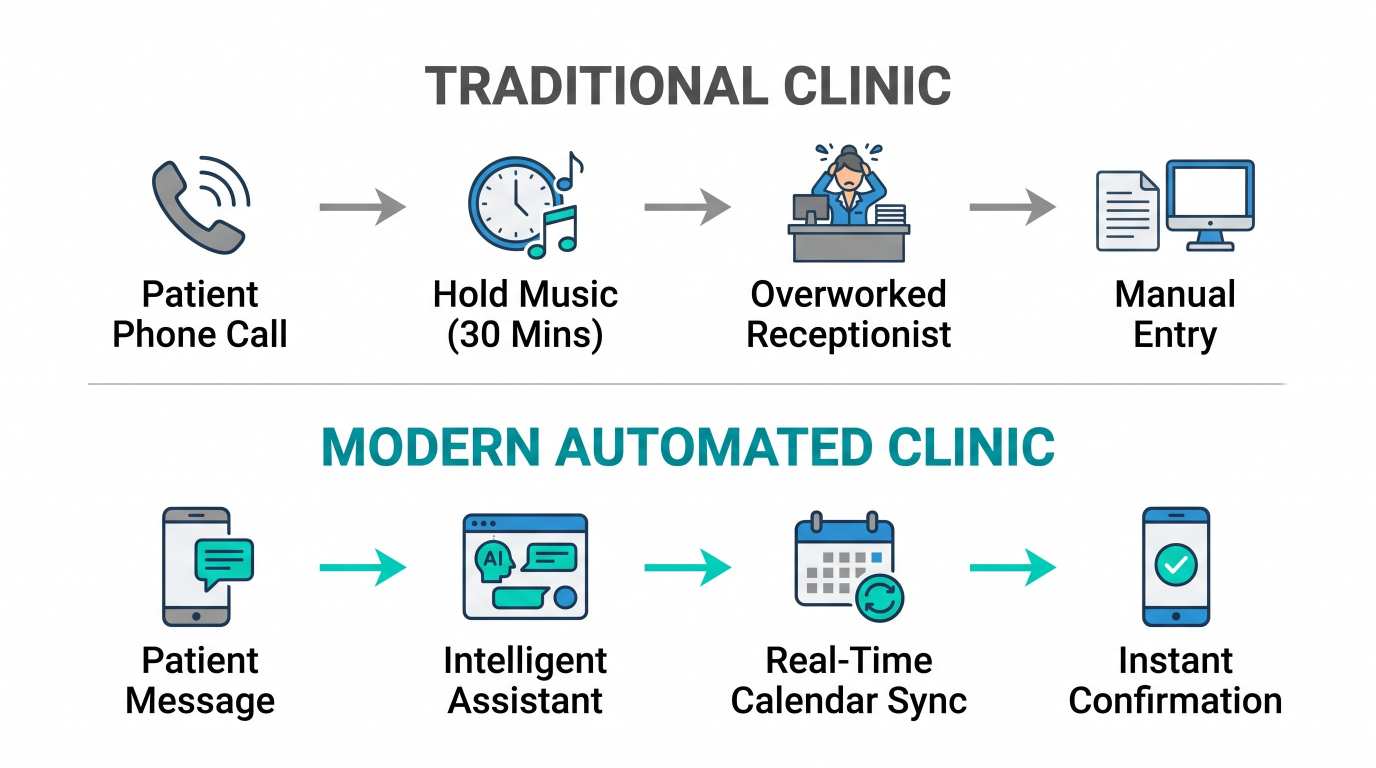
Modern patient portals in 2027 do not just show you a static calendar. They use conversational AI that talks to patients via simple text messages or voice prompts:
"I need to reschedule my Friday appointment."
The system checks the doctor's calendar, finds the best alternative slot, updates the record, and notifies the receptionist automatically.
When patients have simple questions like "Do I need to fast before my blood test tomorrow morning?", smart assistants deliver clear instructions instantly, without making the patient wait on hold for 40 minutes.
Streamlined Billing and Insurance Approvals
Dealing with health insurance paperwork is notoriously stressful. AI automation tools now review insurance pre-authorizations and billing claims in real time. They verify that all required test results and doctor notes are attached before submission.
This single operational fix cuts down denied claims, prevents surprise billing headaches, and lets administrative staff focus on welcoming patients with a smile.
6. Overcoming Real-World Challenges: Privacy, Safety, and Trust
With all these exciting benefits, you might wonder: is everything perfect?
Of course not. Bringing artificial intelligence into medical care brings serious responsibilities. Healthcare leaders and software engineers must work hard to solve three major challenges:
Protecting Patient Data Privacy
Medical information is deeply private. If you talk to a clinic app about a health issue, that data must remain strictly confidential. In 2027, strict healthcare data laws require organizations to use encrypted databases and private AI systems that never leak personal data to open public platforms.
Preventing Algorithmic Bias
AI models learn from historical medical data. If historical records mostly represent one demographic group, the software might perform less accurately for patients of different ethnicities, ages, or genders. Healthcare engineering teams now test algorithms across diverse populations to ensure fair and accurate diagnoses for every single person.
The Human-in-the-Loop Principle
An AI system can calculate probabilities, but it cannot feel empathy. It cannot hold a frightened patient's hand, comfort a worried parent, or navigate complex ethical choices.
The golden rule of healthcare in 2027 remains firm: AI assists, but human professionals decide.
Summary Checklist: The Biggest AI Shifts in 2027
To make everything easy to remember, here is a quick overview of how day-to-day healthcare has changed:
Less Paperwork for Doctors: Ambient voice assistants write medical visit notes in real time, saving hours of screen time every day.
Faster Diagnostic Support: Imaging algorithms spot hidden tumor shadows and cardiovascular risks early.
Constant Home Protection: Wearables and connected monitors catch abnormal health spikes before they turn into emergencies.
Accelerated Medication Research: Laboratory simulations cut years off the search for critical treatments.
Smooth Clinic Operations: Smart booking, quick insurance verifications, and voice automation reduce waiting room friction.
Ready to Modernize Your Business Systems?
Whether you run a medical clinic, an educational platform, an e-commerce brand, or a growing service company, manual processes slow you down.
Take Your Business to the Next Level With Custom Automation
At our agency, we craft custom web applications, mobile platforms, and automated workflow engines that save time and grow revenue. We turn complicated technical challenges into clean, easy-to-use digital tools for your business.
The Road Ahead for Healthcare
As we move through 2027 and look into the future, the transformation of healthcare is not about replacing human compassion with cold machines.
It is about the exact opposite.
By allowing smart artificial intelligence systems to handle data entry, schedule management, routine questions, and complex image comparisons, we remove the heavy friction that has weighed down hospitals for decades.
The result? Better diagnosis, faster medicines, lower operational costs, and doctors who finally have the time to sit, listen, and care for their patients. That is a future of medicine we can all feel good about.
Ready to grow your business?
Contact us today to find out how our strategies can scale your operations to the next level.
Contact Us