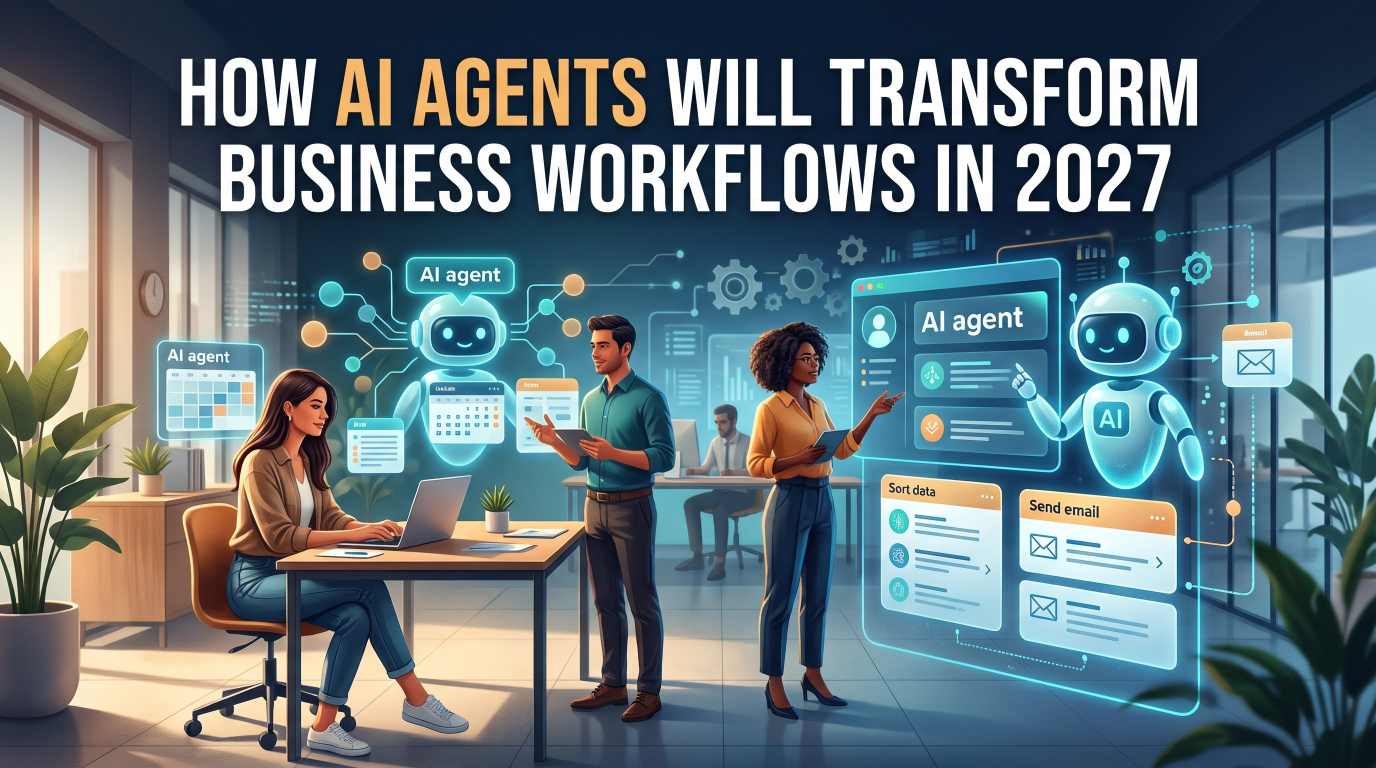
How AI Automation Is Changing Lead Generation in 2026

Have you ever spent hours looking for new clients, sending cold messages, or cleaning up messy spreadsheets, only to get zero replies?
If that sounds like your day, you are definitely not alone.
For years, getting good sales leads felt like guessing in the dark. You bought contact lists, set up boring email chains, waited around, and hoped someone would click. Most of the time, nobody did.
In 2026, that whole playbook is practically dead.
Today, how AI automation is changing lead generation in 2026 is not about crazy sci-fi robots taking over your desk. It is about simple smart software doing the heavy lifting for you while you focus on talking to real people and closing deals.
Think of it like hiring a personal assistant who never sleeps, reads everything in seconds, spots the exact people who want to buy what you sell, and writes friendly notes that people actually want to read.
Let’s sit down and walk through how this works, why it matters for your business right now, and how you can use it without needing a tech degree.
What Does AI Automation in Lead Generation Really Mean?
Let’s strip away the big buzzwords. What are we actually talking about here?
Lead generation simply means finding people who might want to buy your product or service, grabbing their attention, and getting their contact details so you can talk to them.
In the past, doing this took five separate manual steps:
Searching social platforms or search engines for potential buyers.
Checking if their email address actually works.
Guessing what problem they have.
Sending them a template pitch.
Reminding yourself to follow up three days later.
When you add AI automation to that chain, software handles the repetitive, boring parts. The system spots what potential customers are looking for, checks if they are a real match for your offer, and drafts a personal note based on what that specific customer cares about.
Old Manual Process (Slow & Low Reply):
Find List ──> Guess Email ──> Blast Generic Template ──> No Replies

2026 AI Automation Process (Fast & Targeted):
Buyer Intent Signal ──> AI Verification ──> Contextual Message ──> Real Conversation
It is not spamming millions of people. In fact, it is the exact opposite. Because AI does the research in seconds, your messages end up smaller in volume but much higher in quality.
Why the Old Ways of Getting Leads Broke Down
To see why modern tools are winning, we have to look at what stopped working over the last couple of years.
The Problem with Cold Mass Emails
Remember when people sent 1,000 identical emails every morning? Email providers put a hard stop to that. Spam filters got smarter. Privacy settings on phones and browsers locked down. If you blast cold templates today, your messages go straight into the junk folder, and your domain reputation gets burned.
Everyone Can Spot a Lazy Robot
In 2023 and 2024, people started copying and pasting raw prompts straight out of basic chatbots. The internet got flooded with notes that started with:
"I hope this email finds you well in these unprecedented times..."
"In today's fast-paced digital landscape, synergy is key..."
Nobody reads that. It sounds robotic, fake, and annoying. People delete those messages in half a second.
People Want Fast Answers, Not Forms
When a buyer lands on your website today, they do not want to fill out a 7-field form and wait 48 hours for someone from "Sales" to send them a calendar link. They want an answer in 30 seconds. If you make them wait, they simply tap the back button and buy from your competitor down the street.
The Big Shift: How AI Automation Is Changing Lead Generation in 2026
So, what makes 2026 completely different? Three big changes turned lead generation from a numbers game into a precision game.
Feature | The Old Way (Pre-2025) | The Modern AI Way (2026) |
Finding Prospects | Buying static, outdated contact lists | Listening for real-time buyer signals and live intent |
Outreach Style | Sending the same template to 500 people | 1-to-1 notes based on what the prospect just published or asked |
Website Visits | Static contact forms and generic pop-ups | Interactive voice/chat assistants that qualify leads live |
Follow-ups | Manual calendar reminders you forget to check | Smart sequences triggered only when the user takes action |
Lead Scoring | Guesswork based on company size alone | Behavioral score based on live actions and exact budget fit |
Let's break down each of these changes in simple terms.
1. Intent Signals Replace Cold Guesswork
The biggest change in how AI automation is changing lead generation in 2026 is intent data.
Imagine walking into a grocery store. An old salesperson stands at the door handing a coupon for cat food to every single person who walks past. Most people do not own a cat, so they throw the paper in the trash. That is old cold outreach.
Now imagine a smart helper who only offers the coupon to someone standing in the pet aisle looking closely at cat bowls. That person is happy to get the coupon because they actually need it.
That is what AI does online today:
It notices when a company posts a job opening for a project manager (meaning they might need project management software).
It notices when someone visits your pricing page three times in one week.
It notices when a business owner asks a public question on LinkedIn about fixing their website speed.
Instead of guessing who needs help, automation alerts you only when someone shows genuine interest. You reach out right when they have the problem, not months before or weeks after.
2. Hyper-Personalization That Actually Sounds Human
True personalization is not just dropping someone’s first name into an email subject line. Everyone knows {First_Name} is a database tag.
Real personalization means understanding the context.
Here is what an automated system can do in 2026 before you ever type a word:
It reads the prospect’s latest blog post or company announcement.
It finds a specific problem they mentioned (for example, opening a new office or launching a new service).
It drafts a short note connecting your service directly to that event.
Here is a side-by-side comparison:
The Bad Generic Message:
"Hi John, I run a digital agency. We offer SEO and design services. Do you have 15 minutes this Tuesday to jump on a quick discovery call?"
The 2026 AI-Assisted Message:
"Hi John, saw you just opened your second clinic in Austin—congrats! Noticed the new location isn't showing up yet on Google Maps when searching nearby. We built a quick checklist for multi-location clinics to fix that in a weekend. Want me to send the PDF over? No worries if you're all set."
Notice the difference? The second email gives value first, shows you actually looked at their business, and asks for permission without being pushy. AI finds the fact; you provide the genuine help.
3. 24/7 Smart Conversational Agents (Not Dumb Chatbots)
We all remember the old website chatbots from five years ago. You typed a question, and it replied: "Sorry, I didn't understand. Please choose option 1, 2, or 3." They were frustrating to use.
Modern conversational AI behaves like a knowledgeable team member sitting on your site.
What Modern Site Assistants Do:
Answer real questions instantly: If someone asks, "Can your tool connect with Shopify and handle euro billing?" the agent says, "Yes, it syncs with Shopify in two clicks, and euros are supported with zero conversion fees."
Ask smart qualifying questions: "Are you setting this up for a single store or multiple brands?"
Book the meeting directly: If the prospect is a qualified buyer, the AI offers available calendar slots right inside the chat window.
Website Visitor: "Do you work with real estate teams under 10 people?"
        │
        ▼
AI Assistant: "Yes! About 40% of our clients are boutique teams.
Are you looking to organize property listings or track buyer calls?"
        │
        ▼
Visitor: "Track buyer calls from our yard signs."
        │
        ▼
AI Assistant: "Got it. We have a direct call-routing setup for that.
Here is a 2-minute demo link, or I can book 10 mins with Sarah tomorrow morning.
What works best?"
The visitor gets what they need in under a minute, and your sales calendar fills up while you sleep.
4. Cleaning and Enriching Data on Autopilot
If you have ever managed a customer list, you know how messy contact data gets. People change jobs, switch phone numbers, or type fake names into forms to grab free downloads.
In the past, someone on your team had to spend every Friday checking LinkedIn profiles to see if "Mark Smith" was still the marketing director at his company.
Now, background AI automation handles this constantly:
It updates job titles when people move to new companies.
It verifies whether an email inbox is active before you hit send.
It flags duplicate contacts so two salespeople don't reach out to the same lead at once.
Clean data means your emails actually land in real inboxes, saving you money and protecting your sender reputation.
Real-World Example: How a 3-Person Team Outperforms a 20-Person Department
To see how this works in real life, let’s look at a true-to-life example of an independent accounting firm called Peak Books.
The Old Situation
The firm had 1 founder and 2 bookkeepers.
They wanted to work with growing e-commerce stores.
Every week, the founder spent 12 hours manually browsing Instagram stores and sending direct messages.
Out of 100 messages, they usually got 2 replies and maybe 1 new client every two months.
The founder was exhausted and had no time left to do actual accounting work.
What Changed with AI Automation
In late 2025, they set up a simple three-part automated workflow:
Trigger: An automation tool monitors Shopify app reviews and e-commerce forums for business owners complaining about inventory tax troubles.
Analysis: An AI model scans the store website to verify they make at least $20,000 a month in estimated revenue.
Outreach: The tool drafts a short, personalized email offering a free spreadsheet template specifically built for multi-channel inventory tax.
Follow-up: If the owner opens the email and clicks the template link, a friendly follow-up note triggers two days later asking if the formulas made sense.
The Results After 90 Days
Time spent on outreach dropped from 12 hours a week to 45 minutes a week (just checking replies).
Email open rates jumped to 64%.
Reply rates rose to 18%.
They signed 6 new high-paying clients in three months without spending a single dollar on paid ads.
They didn't win by being loud or spammy. They won because their system identified the exact problem at the exact time the customer was feeling the pain.
You can also read this article for automating your business.
How to Use AI Marketing Automation to Grow Your Business
How Startups Can Use AI Without a Large Team
How to Use Social Media to Grow Your Startup Business
Step-by-Step: How to Set Up Your Own AI Lead Workflow Today
You do not need to spend thousands of dollars on enterprise software to start using these systems. You can build a reliable setup using simple tools available right now.
Here is a practical, beginner-friendly 5-step roadmap.
Step 1: Define ICP ──> Step 2: Pick One Channel ──> Step 3: Connect Tools
       ──> Step 4: Write Human Prompts ──> Step 5: Test & Refine
Step 1: Define Your Ideal Customer Clearly
AI can only find what you tell it to look for. If you say, "Find me small businesses," you will get junk. Be specific:
What industry are they in?
Where are they located?
What specific problem keeps them up at night?
What tools or software do they currently use?
Step 2: Choose One Primary Channel
Do not try to automate LinkedIn, email, YouTube, Instagram, and cold calling all at once. Pick the single platform where your buyers spend the most business time. For B2B, that is usually email or LinkedIn. For local services, that is Google search and local reviews.
Step 3: Pick Simple, Interconnected Tools
You only need three basic pieces in your software stack:
A Data & Intent Source: A tool to spot prospective buyers (like Apollo, Clay, or LinkedIn Sales Navigator).
An AI Processing Layer: A language model connection to summarize company news or check criteria.
A Sender or CRM: A clean tool to deliver messages and organize replies (like HubSpot, instantly, or a simple Notion database).
Step 4: Write Prompts That Sound Like a Friend
When you tell your AI tool to draft a message, give it strict rules:
Keep it under 75 words.
Use short, punchy sentences.
Never use buzzwords like "synergy," "cutting-edge," or "revolutionize."
Always end with a low-pressure question (like "Would this be useful for your team?" instead of "Can we book a 30-minute call tomorrow?").
Step 5: Review Before You Send
When you are just starting out, do not put your outreach on complete autopilot. Use what experts call human-in-the-loop. Let the AI find the data and write the first draft, but look over the message yourself and click "Send" manually.
Once you see that the messages sound natural and people are replying happily, you can let the system run with less supervision.
Common Mistakes to Avoid in 2026
While AI automation is powerful, jumping in without clear rules can backfire quickly. Here are the most common traps business owners fall into:
1. Prioritizing Speed Over Accuracy
Sending 5,000 generic emails a day is a fast way to get your domain blacklisted by Google, Outlook, and Yahoo. Focus on finding 50 perfect prospects a week rather than 5,000 random ones.
2. Letting the Bot Lie or Hallucinate
AI models sometimes guess details when they cannot find real data. If an AI claims a business won an award they never received, your message looks foolish. Always instruct your system: "If you cannot find this specific piece of information, do not make it up. Leave the field blank."
3. Forgetting the Human Follow-Through
AI gets you the lead; you close the deal. If an interested client replies saying, "Yes, tell me more," do not send another automated robotic template. Pick up the phone, send a personalized voice memo, or write a genuine reply. People do business with people they trust.
4. Ignoring Privacy Rules
Make sure you respect privacy standards like GDPR in Europe and local spam regulations worldwide. Always provide a clear, one-click way for people to say "No thanks, please remove me," and honor those requests immediately.
What the Future Holds: What to Expect Next
Lead generation is not going to stand still. As we move deeper into 2026 and look toward 2027, two emerging trends are already taking shape:
Voice-First Lead Qualification
We are already seeing AI phone agents that sound completely natural, understand pauses, and can handle simple inbound qualification calls. Local businesses like plumbers, dental offices, and law firms use these tools so they never miss a customer call during busy hours.
Autonomous Lead Orchestration
Instead of running separate campaigns on different platforms, future systems will manage the entire journey across multiple touchpoints. If a prospect reads your article on a tablet, the system might quietly display a helpful case study on their social feed the next day, and send a relevant email only after they show repeat interest.
The goal remains unchanged: less friction, more relevance, and zero wasted time.
Frequently Asked Questions (FAQ)
Is AI automation expensive for small businesses?
No. Many modern lead generation tools offer free starter plans or pay-as-you-go credits. A solopreneur can easily set up a solid automated lead workflow for under $50 to $100 a month.
Will AI automation replace human sales teams?
No, it replaces the manual data entry and cold prospecting work that salespeople hate doing anyway. It frees human representatives to do what they do best: build relationships, show empathy, negotiate terms, and solve complex problems.
How do I make sure my automated emails don't hit the spam folder?
Keep your sending volume modest, warm up your domain properly, verify every email address before sending, and write short messages that encourage quick, natural replies. When email providers see people replying to you, your deliverability stays high.
What is the biggest advantage of AI lead generation in 2026?
Speed to lead. Being able to respond to an interested buyer within seconds instead of hours is the single biggest factor that turns curious visitors into paying customers today.
The Bottom Line
Understanding how AI automation is changing lead generation in 2026 comes down to one simple truth:
Automation is not about doing less work; it is about doing work that actually works.
The days of brute-force spam and boring copy-paste messages are behind us. The winners in 2026 are the businesses that use smart technology to listen closely, offer real value upfront, and treat prospective customers like real human beings.
Start small. Automate one repetitive task this week—whether that is cleaning your contact list, setting up a fast site assistant, or monitoring one buyer intent signal. Once you see the hours you get back and the quality of conversations coming in, you will never want to go back to the old way again.
Key Takeaways for Quick Implementation
Focus on intent, not volume: Target people actively searching for answers, not random lists.
Keep messages short and clean: Write simple, friendly notes without jargon.
Keep a human in the loop: Double-check drafts and handle real customer conversations personally.
Respond instantly: Use smart assistants on your site so visitors get answers right away.
(Looking to optimize your current sales workflow? Take an hour today to review your existing customer journey and spot the single slowest step where leads usually drop off.)
Ready to put your lead generation on smart autopilot?
You don't need a huge marketing team or complicated software to get consistent leads. Let’s map out a customized, zero-spam AI automation workflow for your business.
Ready to grow your business?
Contact us today to find out how our strategies can scale your operations to the next level.
Contact Us